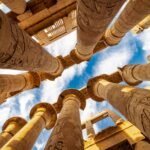
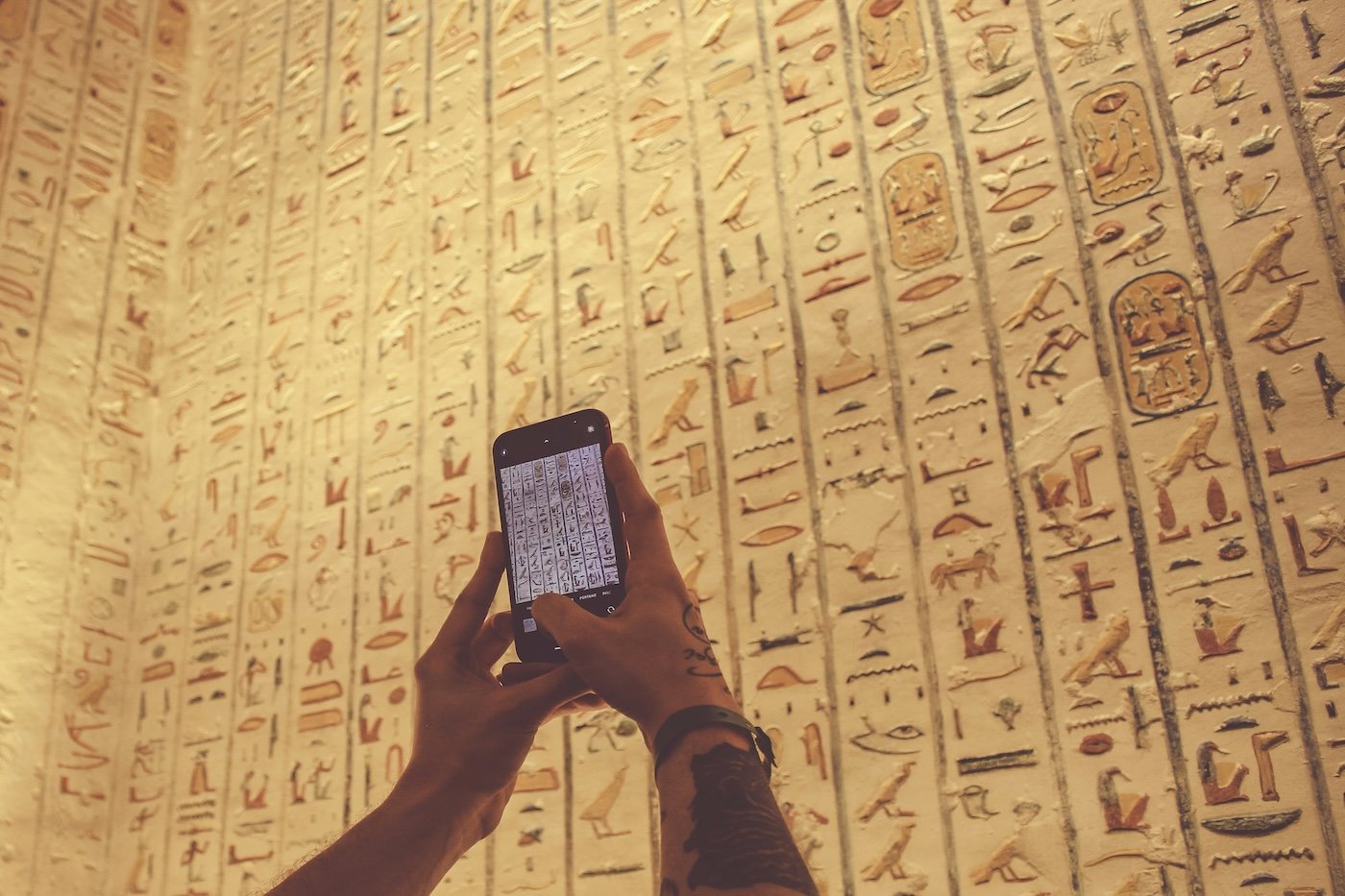
The Valley of the Kings is a royal necropolis on the West Bank of Luxor containing 63 ancient tombs from the New Kingdom. Travelers typically visit three tombs on a standard ticket to see well-preserved hieroglyphs and astronomical ceilings. We find that moving slowly allows the silence of the limestone cliffs to speak.
How many tombs can you truly absorb in one visit
The general admission ticket for the Valley of the Kings allows entry into three tombs. While the site contains over 60 burial chambers, only a rotating selection is open to the public to ensure conservation.
Trying to see every open tomb in a single morning often leads to sensory fatigue. We suggest selecting three distinct styles to appreciate the evolution of New Kingdom funerary art across five centuries.
The Three Tomb Standard
A standard visit typically includes tombs from the Ramesside period. These are characterized by long, straight corridors and vibrant depictions of the Book of Gates or the Book of Caverns.
-
KV11 (Ramesses III) offers detailed secular scenes.
-
KV2 (Ramesses IV) features a massive granite sarcophagus.
-
KV1 (Ramesses VII) is a shorter, intimate experience.
By focusing on just three, you gain the time to look upward at the ceilings. You begin to notice the subtle shift in blue pigment used to represent the night sky.
Beyond the General Ticket
Certain tombs require an additional fee but offer a significantly quieter atmosphere. These sites, such as the tomb of Seti I or Ramesses VI, are often nearly empty of other travelers.
We believe these “extra” tombs are where the real discovery happens. The absence of crowds allows the air to remain still and the details to stand out in the soft light.
The Rhythm of Observation
Instead of rushing from one entrance to the next, we encourage you to sit on the stone benches between visits. Watch the heat haze shimmer over the Theban Hills.
Savor the transition from the bright desert sun to the cool, dark depths of the earth. This physical shift is part of the ancient journey you are retracing.
Why is the tomb of Seti I considered the peak of Egyptian art
The tomb of Seti I, designated as KV17, is the longest and deepest burial chamber in the valley. It represents the pinnacle of the 19th Dynasty’s artistic and architectural achievements.
Every inch of the walls is covered in high-relief carvings. Unlike the painted flat surfaces of later tombs, these figures have a physical depth that catches the light.
The Vaulted Sky of KV17
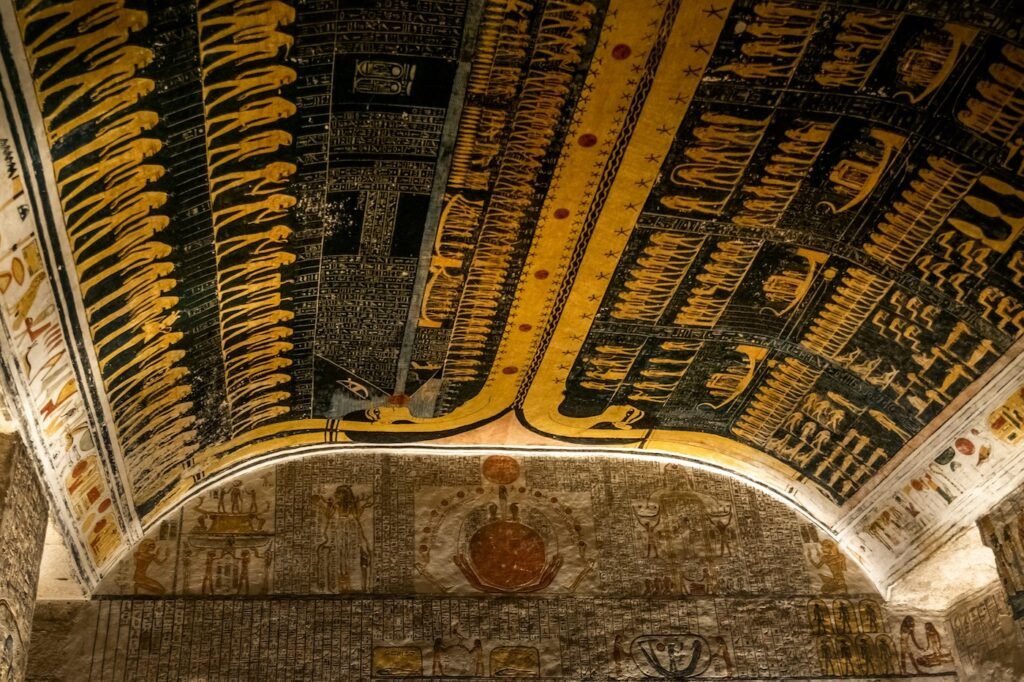
The burial chamber features a magnificent vaulted ceiling painted with astronomical charts. Golden stars against a deep black background depict the constellations as the ancients saw them.
-
Length: 137 meters deep into the limestone.
-
Detail: Thousands of individual hieroglyphs in raised relief.
-
Significance: The first tomb to be fully decorated in this style.
Standing under this celestial map, you feel the weight of three thousand years. It is a moment of intellectual intimacy that few other sites can provide.
Artistry in Relief
The quality of the craftsmanship in KV17 is noticeably different from its neighbors. The lines are fluid, and the anatomy of the deities and the Pharaoh is rendered with a softness that suggests life.
We often spend an hour in this tomb alone. This is not about ticking a box but about absorbing the mastery of an artist whose name is lost to time.
A Legacy in Stone
For families, this tomb serves as a private stage for storytelling. Grandparents can point out the protective wings of Isis, sharing lessons on legacy and protection.
We believe that seeing such beauty together deepens the bond between generations. It turns a history lesson into a shared family tradition.
When does the Valley of the Kings offer the most quiet
Most visitors arrive at the West Bank between 9:00 AM and 11:00 AM. This is when the large cruise ships release their groups, and the valley becomes a hive of activity.
We prefer a different rhythm. By arriving as the gates open or staying as the sun begins to dip, you find a version of the valley that feels like a private discovery.
The Advantage of Early Light
The valley opens at 6:00 AM. At this hour, the air is crisp, and the stone of the cliffs glows with a soft, pale gold.
-
Arrival: 6:15 AM.
-
Benefit: Lower temperatures and minimal noise.
-
Experience: Hear the echo of your own footsteps in the corridors.
[INTERNAL LINK 1] offers a way to reach the West Bank before the heat and the crowds. We believe the Nile reveals its secrets slowly, and the morning light is its first whisper.
The Afternoon Lull
After 2:00 PM, the large groups return to their boats for lunch. The valley falls into a heavy, peaceful silence as the shadows begin to lengthen.
This is the time to visit the most popular tombs. You can linger in front of a wall of hieroglyphs without feeling the pressure of a line forming behind you.
Avoiding the Cruise Ship Rush
Strategic timing means experiencing sites before or after the peak hours. We don’t skip the famous tombs; we simply wait for the moment they are empty.
Your private audience with history is worth the adjustment in schedule. It is the difference between seeing a site and feeling its presence.
Which tombs showcase the most vibrant ancient colors
The dry environment of the Theban Hills has acted as a perfect preservative for three millennia. Some tombs look as though the artists laid down their brushes only yesterday.
While some pigment has faded, certain chambers remain breathtakingly vivid. These spaces offer a genuine connection to the aesthetic world of the pharaohs.
The Geometry of Ramesses VI
The tomb of Ramesses VI (KV9) is famous for its “Book of Day” and “Book of Night” on the ceiling. The yellows and reds remain strikingly bright against the white background.
-
Feature: Double-level burial chamber.
-
Visuals: Massive depictions of the sky goddess Nut.
-
Sensation: Feeling enveloped by a literal map of the cosmos.
This tomb offers a sense of space and light that is rare in subterranean structures. It is a favorite for those seeking intellectual depth.
The Hues of Tutankhamun
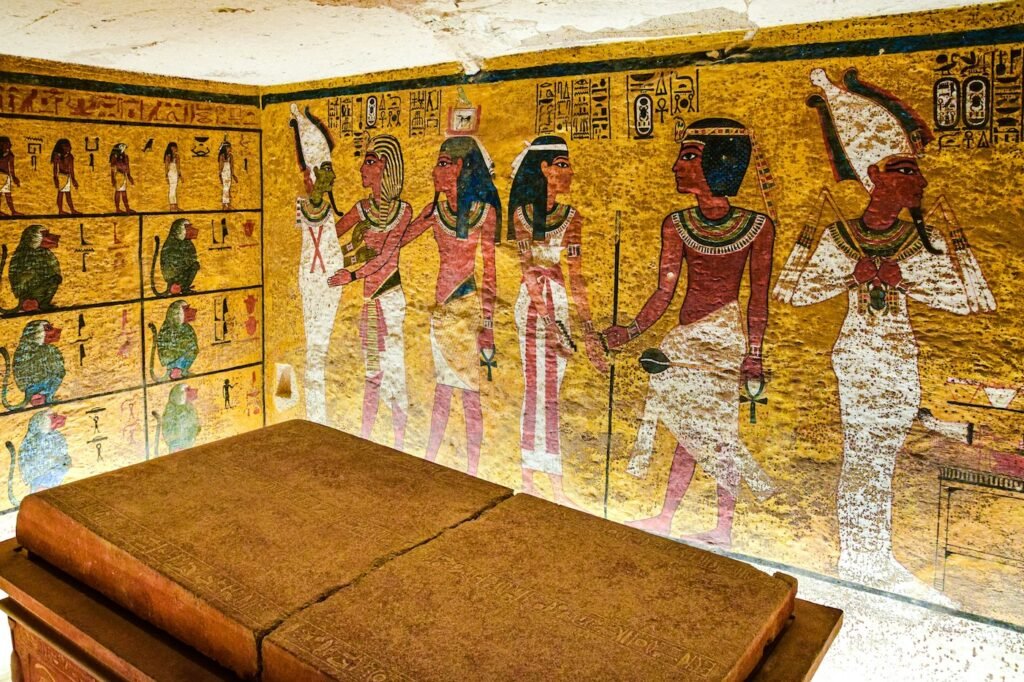
Though small, the tomb of Tutankhamun (KV62) contains a unique yellow background that makes the wall paintings glow. It is the only tomb in the valley that still houses its original resident.
Looking at the face of the young king, you are reminded that this history is human. It is not just stone and sand; it is a story of a person who once lived.
How do we respect the fragile nature of these ancient sites
Visiting the Valley of the Kings is a privilege that comes with a responsibility to the future. The presence of humans changes the humidity and temperature within the tombs.
We advocate for sustainable, respectful cultural engagement. This means following the rules of the Ministry of Tourism and Antiquities with care and attention.
Conservation and Climate Control
Many tombs now have glass partitions and advanced ventilation systems. These are necessary to protect the plaster from the moisture in our breath.
-
Do not touch the walls or reliefs.
-
Avoid using flash photography where it is prohibited.
-
Move quietly to keep dust levels low.
By respecting these boundaries, you ensure that these colors remain vibrant for the next generation of seekers. It is an act of stewardship.
The Ethics of Photography
Photography is now permitted in most tombs with a standard phone, but professional equipment requires a permit. We suggest putting the phone away for at least ten minutes in each tomb.
See the details with your eyes, not through a screen. The memory of the light on a specific carving will linger much longer than a digital file.
Sustainable Discovery
We believe in visiting fewer sites but engaging with them more deeply. This reduces the physical impact on the monuments while increasing your personal transformation.
This isn’t the Egypt of timed photo ops. If you are craving a connection that stays with you, we’d love to help you find it.
What makes the West Bank more than just a burial site
The Valley of the Kings is the focal point, but the West Bank of Luxor is a vast landscape of ancient life and death. To understand the tombs, you must see the temples that served them.
The West Bank was known as the “City of the Dead,” yet it was full of priests, artisans, and guards. It was a place of constant activity and ritual.
The Mortuary Temples
Each pharaoh had a mortuary temple where their cult was maintained after death. The Temple of Hatshepsut and the Ramesseum are essential counterparts to the tombs.
-
Hatshepsut: A three-tiered terrace built into the cliffs.
-
Medinet Habu: Known for its deep, colorful carvings and massive pylons.
-
The Ramesseum: Home to the fallen colossus that inspired the poem Ozymandias.
These sites provide the context for the hidden tombs. They show the public face of the kings who sought eternal privacy in the valley.
The Artisans of Deir el-Medina
The men who carved and painted the royal tombs lived in a nearby village called Deir el-Medina. Their own tombs are small but exquisitely decorated with scenes of daily life.
Seeing a farmer plowing his fields on a tomb wall creates a human connection. It reminds us that ancient Egypt was built by people with families, gardens, and pets.
The Living Landscape
Between the temples, the modern West Bank continues its own rhythms. You will see farmers tending sugarcane and children riding donkeys past the Colossi of Memnon.
This is the Egypt that made explorers write poetry. It is a place where the ancient and the modern exist in a quiet, parallel flow.
How can families build a legacy through Egyptian history
For the Legacy Builder, a trip to Luxor is more than a holiday. It is an investment in a shared family narrative that spans thousands of years.
We see children fall in love with learning when they can see the scale of history. It is one thing to read about a pharaoh; it is another to stand in his shadow.
Storytelling for All Ages
Our guides are selected for their passion, not just their knowledge. They don’t just list dates; they tell the stories of the people behind the names.
-
Engagement: Finding the “secret” details in the hieroglyphs.
-
Connection: Discussing the family trees of the 18th Dynasty.
-
Memory: Sharing a cold drink in the shade of a temple wall.
We believe family history meets human history in these moments. It creates a private stage for wisdom to be passed down through the generations.
Hands-on Heritage
We encourage children to sketch what they see or to try and decipher basic cartouches. This active engagement turns them from passive observers into young explorers.
When a child discovers the name of Ramesses on a stone, their eyes light up. That spark of curiosity is the true value of the journey.
Shared Moments of Wonder
The silence of the Valley of the Kings provides a space for families to connect without the distractions of the modern world. There are no screens here, only stone and stories.
We care more about your family’s comfort than our own ego. We move at your pace, allowing for the questions that arise when you finally have time to think.
Is a private guide necessary for emotional connection
The Valley of the Kings can be overwhelming without a steady hand to guide the way. A guide acts as a bridge between the mute stones and the living history.
However, not all guides are the same. We believe in the “Human Library” approach, where expertise is shared through conversation rather than a lecture.
Moving Beyond Factoids
A standard tour often focuses on the “what” and the “when.” An intimate tour focuses on the “how” and the “why.”
-
Standard: “This tomb was built in 1200 BC.”
-
Intimate: “Notice how the artist changed the angle of the arm here to show movement.”
This level of detail is what creates a genuine connection. It allows you to see the hand of the creator in the work.
The Human Library
Our crew lives this history every day. They are not just staff; they are enthusiasts who spend their free time reading the latest archaeological reports.
They know which tombs have the best lighting at noon. They know where to find the small, overlooked carving of a honeybee that everyone else misses.
Your Private Audience
Having a guide allows you to navigate the valley with confidence. You don’t have to worry about the logistics of tickets or transport; you can simply be present.
We don’t just offer tours; we offer invitations to see what others miss. If you’re ready to discover what happens when you stop rushing, let’s talk about your journey.
How should you prepare for the heat and terrain of the West Bank
The Valley of the Kings is a natural heat trap. The limestone cliffs reflect the sun, and temperatures can be 10 degrees higher than in the center of Luxor.
Preparation is the pragmatic side of our poetic journey. It ensures that your focus remains on the beauty of the tombs rather than the discomfort of the climate.
Essential Gear for Discovery
Wear light, breathable fabrics like linen or cotton. A wide-brimmed hat is essential, as there is very little shade in the central valley.
-
Footwear: Sturdy walking shoes with good grip for uneven stone.
-
Protection: High-SPF sunscreen and polarized sunglasses.
-
Comfort: A small hand fan or a cooling mist spray.
Hydration and Health
Drink more water than you think you need. The dry desert air evaporates sweat instantly, so you may not realize you are dehydrating.
We always provide chilled water, but having your own insulated bottle is a good practice. Savor the quiet moments of rest between tomb visits.
Movement with Ease
The Valley is quite large, but an electric “taf-taf” train runs from the visitor center to the tomb area. This saves your energy for the stairs inside the burial chambers.
Take the stairs slowly. Many tombs descend deep into the earth, and the climb back up can be taxing in the heat. There is no rush; we linger so you can breathe.
Frequently Asked Questions
Can I take photos inside the tombs?
You can take photos with a mobile phone in most tombs for free. Flash is strictly prohibited as it damages the ancient pigments. Professional cameras and tripods require a special permit purchased at the main gate.
Is the tomb of Tutankhamun worth the extra fee?
For many, seeing the mummy of the world’s most famous pharaoh is a profound experience. While the tomb is smaller and less decorated than its neighbors, its historical significance and the presence of the king himself make it a unique encounter.
How much walking is involved in the West Bank?
A typical visit involves walking about 2 to 3 miles on uneven limestone and gravel. Most tombs also have sets of stairs or ramps leading down to the burial chambers. We recommend wearing sturdy, comfortable shoes to navigate the terrain with ease.
What is the best way to reach the West Bank from Luxor?
You can reach the West Bank by a private car over the Luxor bridge or by a local ferry across the Nile. We prefer the water crossing; it is a quiet transition that prepares you for the ancient landscape ahead.
Are there places to eat in the Valley of the Kings?
There is a small cafeteria near the visitor center offering basic snacks and drinks. For a more genuine meal, we suggest visiting the small, family-run restaurants near the village of Deir el-Medina after your tour concludes.
This isn’t the Egypt of tour buses and timed photo ops. If you’re craving the kind of connection that lingers long after you return home, we’d love to design your story on the water.
We believe the Nile reveals its secrets slowly. If you are ready to discover what happens when you stop rushing, let’s talk about your journey to the Valley of the Kings.